
Some days are just harder
You’ve been practising for weeks, and things have been going well. Then one day, it all seems to fall apart. Your dog ignores cues they know perfectly well, gets distracted by everything, or just doesn’t seem themselves.
It’s easy to feel discouraged on days like that, or to wonder whether you’ve gone backwards. But dog training is not linear. Some days are better than others, and that is perfectly acceptable.
Why it happens
Your dog is a whole, living animal, not a machine that produces the same result every time. How well they learn and respond on any given day is shaped by everything going on for them: how well they’ve slept, what they’ve eaten, whether they’re feeling stressed, uncomfortable or unwell, how busy or unfamiliar the environment is, and, for younger dogs, the changes happening as they grow up.
The same is true for you. If you’re tired, rushed or worried, your dog will often pick up on it.
None of this means something has gone wrong. It simply means you and your dog are both living beings, having a day.
Even the best trainers have off days
This isn’t something that only happens to new or inexperienced owners. Even the top dog trainers experience it with their own dogs. The difference isn’t that their training never wobbles; it’s that they expect it to and don’t read too much into a single session.
Ollie and the weaves
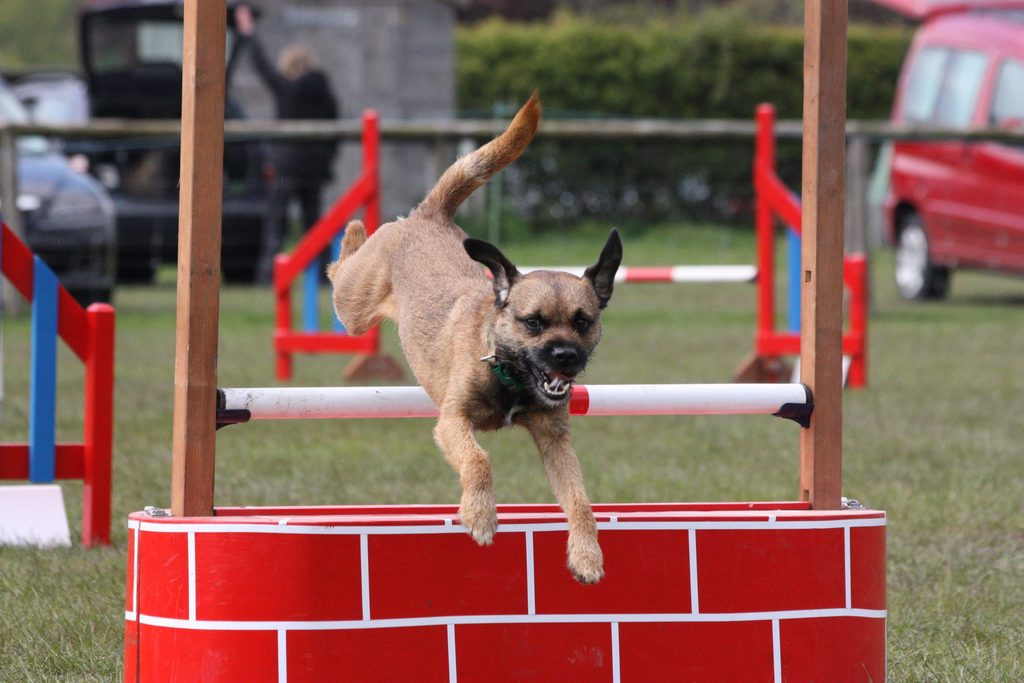
I’ve been there too. Early in my agility journey, my Border Terrier Ollie was flying up the Kennel Club grades. My proudest achievement with him at the time was teaching him the weaves in just 12 days, using Susan Garrett’s 2×2 method. His weaves were independent, and most of the time he’d complete the whole set, whether that was 6, 9 or 12 poles.
In a competitive sport like agility, there’s always something to improve. So I moved on to other skills, and I trusted his weaves far too much. Then one day in the ring, he simply ran straight past them. On some courses he’d nail them; on others he wouldn’t. His weaves were going backwards, and I had no idea why.
After a lot of sessions with other trainers, I finally found the main cause. I had dropped weave training completely in favour of other challenges, so the weaves were no longer being reinforced or proofed in new situations. Ollie hadn’t forgotten how to weave. The behaviour had simply stopped being worth as much to him.
The fix was the same one that applies to nearly every issue: keep reinforcing the behaviour, to remind your dog that it’s still a valuable one.
When the dips keep coming
Most wobbles are just part of an ordinary up-and-down week. But if a skill your dog used to do reliably keeps slipping, it’s worth gently asking why, rather than assuming your dog is being difficult. Is something going on for your dog physically or emotionally? Has the environment changed? Or, like Ollie, has the behaviour simply stopped being reinforced as often as it used to be?
Behaviours your dog finds rewarding are the ones that stick. Even the skills you feel you’ve “finished” need topping up from time to time.
Look at the overall trend
Rather than judging progress by one walk or one training session, step back and look at the bigger picture. Over weeks and months, are things gradually moving in the right direction? If the overall trend is upward, you and your dog are both succeeding, even if the line has plenty of dips along the way.
Your job: adapt to the dog in front of you
On a harder day, the most helpful thing you can do is be understanding and adapt to the dog you have in front of you in that moment, rather than the dog you had yesterday or the one you expected to have today. That might mean:
- Making things easier, with fewer distractions or more distance
- Keeping sessions shorter
- Going back to something your dog finds easy and finishing on a success
- Simply calling it a day and enjoying a relaxed walk together
Choosing to adapt isn’t giving up. It’s listening to your dog, and that’s what builds the kind of trust that lasts.