
When the “perfect” recall disappears.
If you have a puppy, you may remember how easy recall felt in those early weeks. You called, they came running – every time. Then, somewhere between around 6 months and 2 years old, it started to slip. A pause before responding. A glance at you, then back at the other dog. And eventually, a moment where your dog simply didn’t come back at all. If this is happening to you, it’s worth saying straight away: you haven’t undone your training, your dog isn’t being stubborn or defiant. This is one of the most common experiences in dog ownership, and it has a lot to do with what’s happening inside your dog.
Whats going on inside an adolescent dog.
Adolescents is a period of major change. The brain is reorganising, hormones are shifting, and your dog is growing in confidence and independence. The world that once felt big and slightly overwhelming is now full of interesting things to explore – other dogs, people, smells, wildlife.
A young puppy tends to stay close because staying close feels safe. An adolescent dog has more courage to move away and investigate. That’s healthy development, but it means the things around you are now competing much harder for your dog’s attention.
It’s also worth looking at the whole dog. Tiredness, stress, discomfort, a growth spurt, or simply an overstimulating week can all make it harder for your dog to respond, even when they know exactly what the recall cue means.
The same applies to a new-to-you dog, whatever their age. They haven’t yet built up a history with you, so there’s no reason (yet) for you to be more interesting than the world around them.
Recall is a choice your dog makes
Dogs are outcome-led. Every time you call your dog, they are, in effect, weighing up two options: what they get from coming to you, versus what they get from carrying on with what they’re doing.
That’s why recall is really about value. Every time coming to you leads to something your dog genuinely wants — a favourite food, a game, a chance to go back and play — you add value to that choice. Think of it as payments into an account. The more you’ve paid in, the more you can draw on when something exciting shows up.
During adolescence, or with a new dog, this is exactly the time to keep paying high value — not to phase rewards out. Your dog’s world has just become a lot more rewarding, so what you offer needs to keep up.
The mindset: look for chances to reinforce the choice of you.
Rather than thinking of recall as a command you give when you need it, try thinking of it as something you’re building on every walk. Keep an eye out for any moment your dog chooses you over the environment:
- They glance back to check where you are
- They choose to walk nearby rather than drift off
- They notice another dog and look at you instead
- They come back to you without being asked
Each of these is an opportunity to reinforce. You don’t need to wait for a formal recall to reward your dog for choosing you.
The other half: being mindful of where you put your dog
While you’re looking for those opportunities, it’s just as important to notice situations where the odds aren’t yet in your favour.
If you walk into an environment where there’s still a real chance that something else — a group of dogs playing, a squirrel, deer in the park — is going to be worth more to your dog than you are, recall is likely to fail. And when it fails, your dog doesn’t just ignore you. They get to run off and enjoy the very thing they chose over you. That experience is rewarding, so the behaviour you don’t want becomes more likely next time.
Many of us will have seen the well-known clip of Fenton charging through Richmond Park after a herd of deer, with his owner calling after him. It’s funny to watch, but most dog owners also feel a pang of recognition — and sympathy. Fenton wasn’t being “bad”. In that moment, the deer were simply worth more than anything else on offer, and chasing them felt fantastic.
Fizz, the squirrel and the fluffy tail
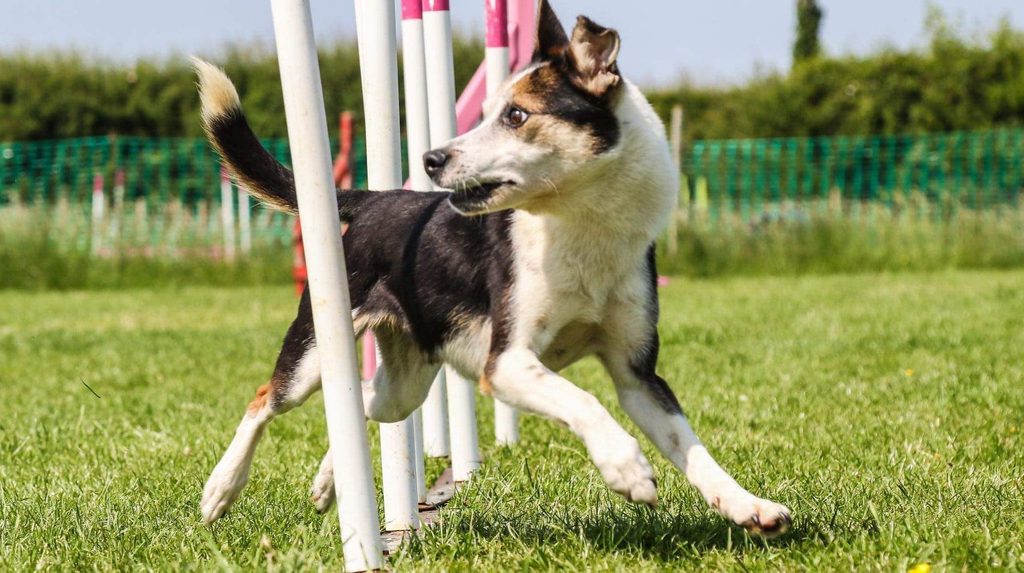
I’ve learned this one the hard way myself. Fizz, my Jack Russell cross Kelpie, came to live with us at six months old — right in the middle of adolescence, and new to us. At the time, I hadn’t yet fully appreciated what it took to build a reliable recall.
Fizz has always loved chasing rodents and fluffy tug toys. And why wouldn’t she? It’s part of who she is. A few years later, we were out walking in some nearby woods as autumn set in, and there were squirrels about in the trees. Whenever Fizz spotted one, she’d freeze and lock her eyes onto it.
She was off lead — I believed we’d cracked recall by then. On this occasion, she did her usual freeze. But instead of the squirrel keeping still or disappearing out of sight, this one decided to show off, leaping from tree to tree. Fizz followed along underneath, eyes fixed upwards, until the squirrel missed a branch and dropped to the ground about two metres in front of her.
I called her name. And the squirrel won. Honestly, it was never going to be a contest: this was half of her breed instinct kicking in, right in front of her nose.
The squirrel gathered himself and made a dash for the trees, but not before Fizz got close enough to grab him. Thankfully, all she got was the fluff from the end of his tail, which he gave up in order to escape. Fizz stood there, stunned, fluff hanging from her mouth, looking confused that the squirrel wasn’t actually there anymore. She was too puzzled to give chase, which gave me just enough time to pop her back on the lead in case she changed her mind.
Fizz wasn’t being disobedient. I had put her in a situation where something far more valuable to her than me was very likely to appear — and in that moment, there was nothing I could offer that competed with a squirrel landing at her feet
What that walk taught me
Looking back, the clues were all there: autumn, busy squirrels, and a dog whose genetics are built for exactly this. Her freeze-and-stare was also her telling me, in body language, precisely what she was thinking about — well before the chase began.
So before you head out, it’s worth asking yourself: Is there still a chance something here is more valuable to my dog than I am right now?
If the honest answer is yes, that’s useful information, not a failure. You might:
- Keep your dog on a long line so they can explore while you stay in control of the outcome
- Learn your dog’s early warning signs (a freeze, a hard stare, a lifted paw) and reward them generously for looking back at you before the chase starts
- Choose rewards that speak to who your dog is — for a dog like Fizz, a fluffy tug toy that can be chased and caught may be worth far more than a biscuit
- Increase the distance, or come back at a quieter time or season
This way, you’re still building value in the choice of you, without setting your dog up to practise running off.
This phase does pass
Adolescence can be tiring and, at times, frustrating. But the value you build now, one payment at a time, is what you’ll be drawing on for years to come. By staying worth coming back to, and by choosing situations your dog can succeed in, you’re not just protecting your recall — you’re strengthening your relationship.